
General Information of the Compound
| Compound ID |
CP0398858
|
||||||||||||||||||
|---|---|---|---|---|---|---|---|---|---|---|---|---|---|---|---|---|---|---|---|
| Compound Name |
4-(4-pyridin-2-yl-1,3-thiazol-2-yl)morpholine
Show/Hide
|
||||||||||||||||||
| Structure |
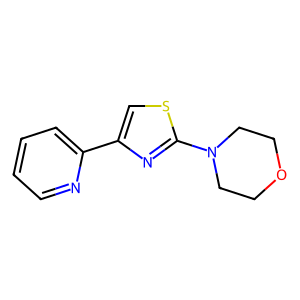
|
||||||||||||||||||
| Formula |
C12H13N3OS
|
||||||||||||||||||
| Molecular Weight |
247.323
|
||||||||||||||||||
| Canonical SMILES |
C1CN(CCO1)c1nc(cs1)-c1ccccn1
Show/Hide
|
||||||||||||||||||
| InChI |
InChI=1S/C12H13N3OS/c1-2-4-13-10(3-1)11-9-17-12(14-11)15-5-7-16-8-6-15/h1-4,9H,5-8H2
Show/Hide
|
||||||||||||||||||
| InChIKey |
NUKKJULAGVQQNK-UHFFFAOYSA-N
|
||||||||||||||||||
| Physicochemical Property |
"RO5" indicates the cutoff set by lipinski's rule of five: (1) Molecular weight less than 500 Dalton; (2) xlogp less than 5; (3) No more than 5 hbonddonor (Hydrogen Bond Donor Count); (4) No more than 10 hbondacc (Hydrogen Bond Acceptor Count); (5) No more than 10 rotbonds (Rotatable Bond Count). Show/Hide
|
||||||||||||||||||
| Click to Show/Hide the External Link(s) of This Compound | |||||||||||||||||||
| PubChem ID | |||||||||||||||||||
| ChEMBL ID | |||||||||||||||||||
Map of Molecular Bioactivity Related to the Compound
|
Map of Molecular Bioactivity Related to the Compound Compound Cell Line Protein Bioactivity Value: <= 0.1 μM > 0.1 μM and <= 10 μM > 10 μM Imprecise Activity |
|
|---|
Table of Molecular Bioactivities Related to the Compound